




What started as a haunted house experiment in Japan became one of the most iconic franchises in entertainment history. The history of Resident Evil spans nearly three decades, two gaming generations, multiple Hollywood films, and a fanbase that simply refuses to die, much like the zombies at its core.
Whether you grew up surviving Raccoon City on a PlayStation or discovered the series through Netflix, there is something undeniably gripping about this world. Let us take you through the full story.
Key Takeaways
Resident Evil was born from a 1989 Capcom game called Sweet Home and redefined the survival horror genre.
The franchise has sold over 140 million games worldwide and spawned one of the highest-grossing video game film series ever made.
The series continues to evolve, balancing legacy lore with fresh gameplay innovation.
Resident Evil: Tofu TUBBZ (Mini Edition)
€9,99
Straight from the survival mode hall of fame, Tofu waddles in as the most unexpectedly iconic mini duck yet, simple, surreal, and an absolute must for die-hard Resident Evil fans. Key Details Official Resident Evil merchandise Designed and manufactured by… read more

Series Origins and Creation
Back in 1994, Capcom director Shinji Mikami was tasked with creating something different. Inspired by Sweet Home, a 1989 Famicom horror RPG, and the atmospheric dread of classic horror films, he laid the foundations for what would become the first major survival horror video game.
Released in March 1996 in Japan as Biohazard, the game introduced players to a crumbling mansion, limited ammo, and enemies that did not go down easily. The name was changed to Resident Evil for Western markets after trademark issues. It was a bold, nerve-shredding experience, and players loved it.
Capcom had created something genuinely new. The survival horror genre had found its defining title.
Establishing the Core Narrative
So, what is the backstory of Resident Evil? At its heart, the story centres on the Umbrella Corporation, a powerful pharmaceutical company that secretly develops biological weapons. Their most dangerous creation, the T-virus, causes catastrophic mutations in both humans and animals.
The opening chapter introduces S.T.A.R.S. (Special Tactics and Rescue Service) operatives, including Chris Redfield and Jill Valentine, investigating a series of bizarre murders near Raccoon City. What they discover changes everything. The narrative lore established here, corrupt corporations, viral conspiracies, and moral ambiguity, has carried the franchise for nearly thirty years.
Breakthrough Moments in Gameplay and Story
Resident Evil 2 is widely considered the franchise's first masterpiece. Released in 1998, it dramatically deepened the Raccoon City lore, revealing the full scale of the T-virus outbreak through two distinct campaigns with interconnected storylines.
The game sold 4.96 million copies and proved the series had lasting commercial power. Its 2019 remake became one of Capcom's best-selling titles, introducing the horror to a whole new generation.
Expansion Into Film and Media
The cinematic adaptations began with the 2002 film Resident Evil, directed by Paul W.S. Anderson. While it departed significantly from the game's storyline, it introduced millions of mainstream audiences to the world of Umbrella and the T-virus.
Milla Jovovich starred as Alice, a character created exclusively for the films. The movie grossed over $102 million worldwide on a $33 million budget, an undeniable success that greenlit an entire franchise.
Ongoing Movie Franchise Development
The Resident Evil movies span six main films from 2002 to 2016, with a soft reboot, Welcome to Raccoon City, arriving in 2021 and a Netflix series launching in 2022. The film series grossed over $1.2 billion globally, making it one of the most successful video game film adaptations in Resident Evil's history.
The franchise timeline across both games and films demonstrates Capcom's remarkable ability to sustain a property across multiple decades and formats.
Impact, Legacy, and Cultural Influence
Few franchises can claim to have redefined a genre. Resident Evil collectables did exactly that. Before 1996, horror games existed, but survival horror as a distinct, tension-driven, resource-management experience was largely undefined. Capcom changed the conversation entirely.
Its influence is visible in every major horror game released since, from Silent Hill to The Last of Us.
Long-Term Franchise Evolution
The series has never stood still. It has shifted from fixed cameras to over-the-shoulder action, and from action-heavy gameplay back to claustrophobic first-person horror. Each pivot has sparked debate, but each has also brought new fans.
The character evolution of its cast from 1990s pixel sprites to photorealistic performances mirrors the evolution of gaming itself. The narrative lore has deepened with every entry, rewarding long-term fans while remaining accessible to newcomers.
Resident Evil: Claire Redfield TUBBZ (Mini Edition)
€9,99
Sister, survivor, and now a mini duck with maximum attitude. Claire's armed with determination and ready to waddle straight into the zombie apocalypse. Key Details Official Resident Evil merchandise Designed and manufactured by Numskull Designs TUBBZ – iconic characters turned… read more

Collect the Icons with TUBBZ
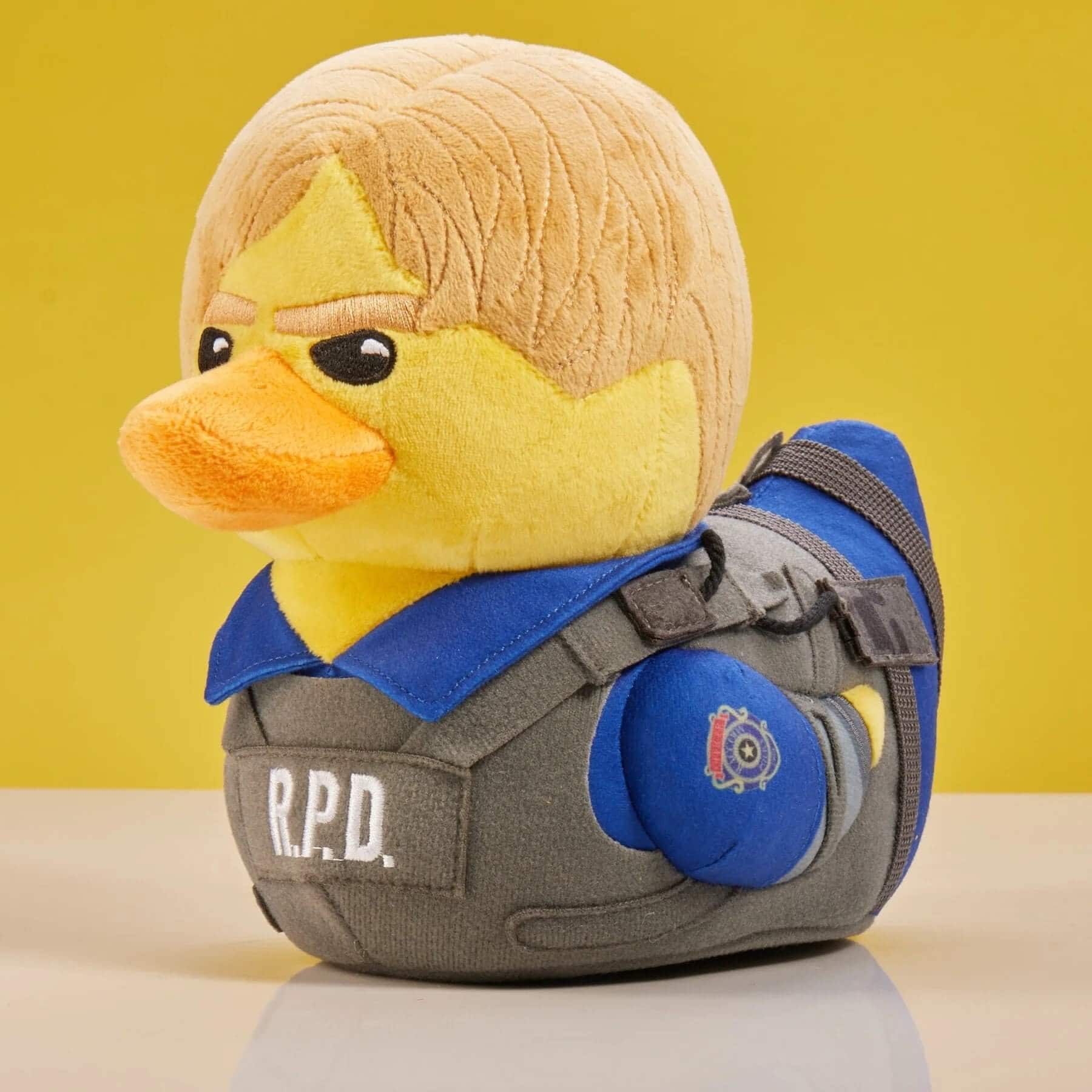
If you are a fan of the franchise, you will want to bring a piece of Raccoon City home. TUBBZ offers officially licensed Resident Evil collectables that are perfect for fans and collectors of all ages:
Resident Evil: Chris Redfield TUBBZ Plushie: The iconic S.T.A.R.S. operative reimagined as an adorably chunky plushie: A must-have for any RE fan's shelf.
Resident Evil: Jill Valentine TUBBZ Plushie: The master of unlocking, now in irresistibly soft plushie form. Detailed, officially licensed, and utterly charming.
Conclusion
The history of Resident Evil collectables is ultimately a story of reinvention. From a 1996 PlayStation experiment to a global entertainment empire, Capcom built something that has genuinely shaped modern pop culture. The franchise timeline stretches across games, films, series, and collectables, each expanding the world of Raccoon City in exciting new directions.
Whether you are a series veteran or a curious newcomer, there has never been a better time to explore the narrative lore, revisit the iconic characters, and celebrate one of gaming's greatest achievements. Start with the original, or dive straight into Village; either way, you are in for a treat.
FAQs: History of Resident Evil
What is the history of Resident Evil, and when did it begin?
The history of Resident Evil began in 1996 when Capcom released the original game in Japan as Biohazard. It launched the survival horror genre and has grown into a global franchise.
How does the history of Resident Evil connect to the films?
In the history of Resident Evil, the film adaptations began in 2002 and run parallel to the games, following a separate storyline centred on an original character called Alice.
Which game is most important to understand the history of Resident Evil?
Resident Evil 2 (1998) is widely considered pivotal in the history of Resident Evil. It expanded the Raccoon City lore and set the tone for the entire franchise.
Is the history of Resident Evil documented in any official books?
Yes. Various artbooks, companion guides, and the official Resident Evil archives have documented the history of Resident Evil, covering game development, character design, and storyline evolution.
Where can I find more about the history of Resident Evil online?
The history of Resident Evil is well-documented on the official Capcom website and dedicated community wikis, which offer detailed dives into the lore, timelines, and development history.